7 Signs of Hail Damage on Your Kuna, Idaho Roof (And What to Do Next)
7 Signs of Hail Damage on Your Kuna, Idaho Roof (And What to Do Next)
If a storm rolled through Kuna last week and you're standing in your driveway wondering whether to call your insurance company — read this first. Most hail damage in the Treasure Valley isn't visible from the ground, and homeowners along Swan Falls Road, Deer Flat Road, and the newer subdivisions off Linder routinely miss the signs until a leak shows up six months later. By then, the claim window has usually closed.
Here's what to look for, what to ignore, and when to pick up the phone.
Why Kuna Sees So Much Hail Damage
Kuna sits in one of Idaho's most active hail corridors. Ada County and the broader Treasure Valley — Eagle, Meridian, Nampa, Star, and Boise's south side — get hit with measurable hail most springs, and storms rolling off the Owyhee Mountains routinely drop pea- to golf-ball-sized stones across neighborhoods like Falcon Crest, Silverhawk Estates, and the rapidly built-out areas near Hubbard Reservoir. The Treasure Valley's freeze-thaw cycles and intense summer UV already shorten asphalt shingle lifespan; add a single hail event on top of that and a 12-year-old roof can lose half its remaining life overnight.
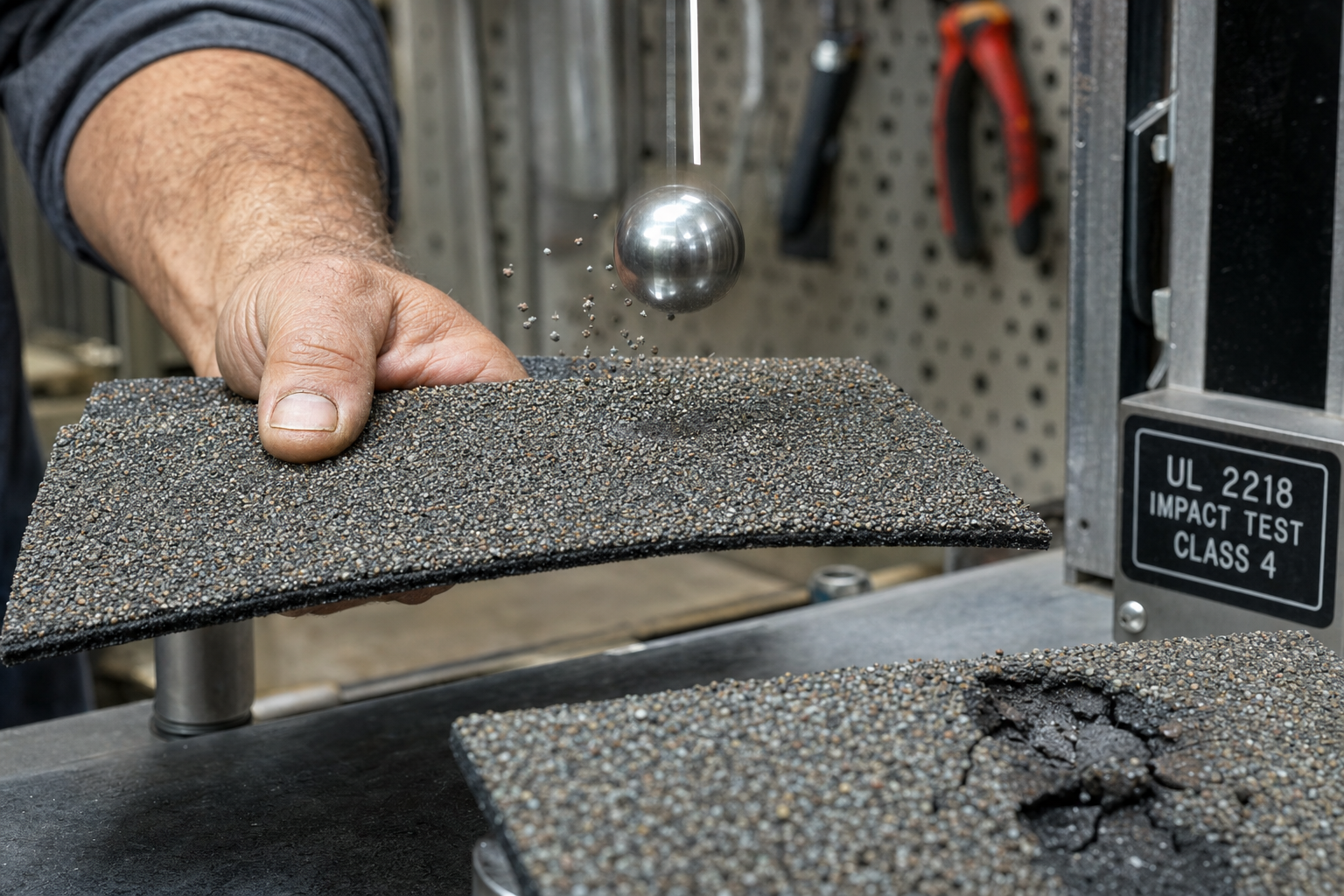
That's the part most Kuna homeowners don't realize: hail damage doesn't have to crack a shingle to matter. It just has to bruise the mat underneath.
The 7 Signs of Hail Damage on a Kuna Roof
1. Circular Dark Spots (Bruising) on Shingles
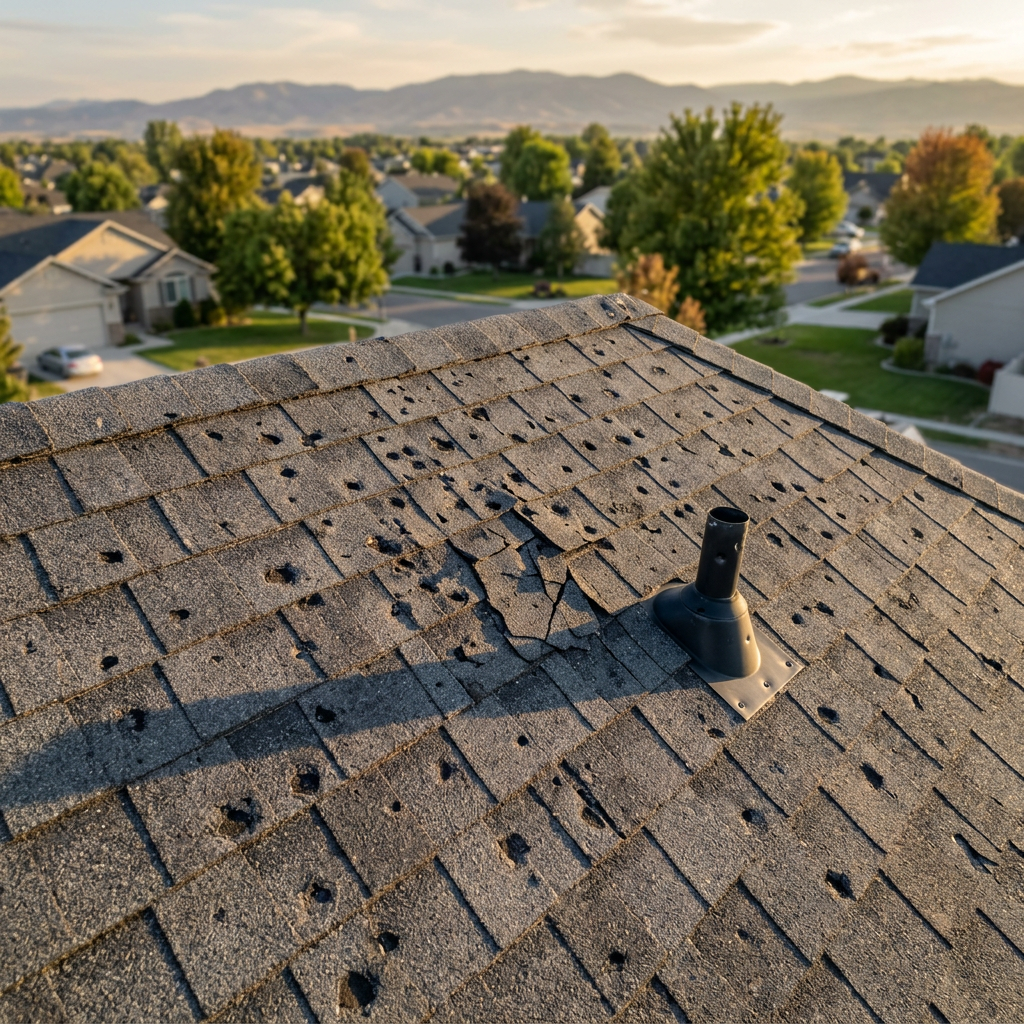
The most common and most missed sign. Hail strikes knock granules loose and compress the asphalt mat underneath, leaving round, slightly indented bruises about the size of a dime to a quarter. They look like dark, shadowed dimples against the shingle color. From the ground, they're nearly invisible — even with binoculars. From the roof itself, they're obvious once you know what you're looking at.
2. Granule Loss in the Gutters and Downspouts
Walk around your house after a storm and look in the gutter troughs and at the bottom of downspout splash blocks. If you see a noticeable pile of black, sandy granules that wasn't there before the storm, your shingles took hits. Some granule loss is normal over a roof's life; a sudden post-storm pile is not.
3. Dings or Dents in Soft Metal
Check the metal flashing around your chimney, roof vents, gutters, downspouts, and any aluminum window screens or wraps. Soft metal dents easily — if you're seeing fresh circular dings on these surfaces, the same hail hit your shingles. This is one of the strongest pieces of evidence insurance adjusters look for.
4. Cracked, Split, or Bruised Shingle Tabs
Larger hail (golf ball or quarter-sized, which Kuna gets several times most seasons) can crack shingle tabs outright. Look for small splits running across the shingle face — not along the edges, which is usually weather-related cracking. Fresh hail cracks have sharp, clean edges and often show the lighter-colored mat underneath.
5. Damaged Roof Vents, Skylights, or Solar Panels
Plastic roof vents and skylight domes crack under hail before shingles do in many cases. If you can see your roof vents from a second-story window or the ground and they look fractured, cracked, or broken, your shingles almost certainly took damage too. Same goes for solar panel installations common on newer Kuna builds.
6. Leaks That Appear Weeks or Months After a Storm
This is the silent killer. A bruised shingle doesn't leak immediately — the asphalt mat is still intact. But over the next few months, UV exposure breaks down the compromised area, water works through the cracks, and you start seeing ceiling stains, attic moisture, or mold. Most homeowners don't connect the dots back to a storm that happened a season ago. By then, the insurance claim window in Idaho has typically passed.
7. Damage to Other Outdoor Surfaces
If your roof took hail, the rest of your property took hail. Look for: dented car hoods or trunk lids, shredded leaves on trees and shrubs, broken or chipped fence boards, dented air conditioner condenser fins, and pockmarks on wood deck railings. The more of these you find, the stronger your case for a roof claim.
What's NOT Hail Damage (And Don't Get Talked Into It)
Storm chasers — out-of-state crews who descend on Kuna and Meridian after every major storm — will try to convince you that anything unusual on your roof is hail damage. Be skeptical of:
- Granule loss along the edges of shingles. This is normal weathering, especially on roofs over 10 years old.
- Blistering (small bubbles in the shingle surface). This is a manufacturing or heat-related issue, not hail.
- Edge curling or cupping of shingles. This is age and ventilation, not impact.
- Algae streaks (black or green stains). This is biological growth — common in shaded Treasure Valley neighborhoods like the older parts of Greenleaf — and has nothing to do with hail.
A legitimate Kuna roofing contractor will tell you what's hail damage and what's age. A storm chaser will call everything hail damage and pressure you to sign an Assignment of Benefits agreement on the spot. Don't sign anything with a door-to-door contractor before getting an independent inspection.
What to Do If You Think You Have Hail Damage
The order matters. Get this wrong and you can lose your claim.
Step 1: Document from the ground. Photograph dented gutters, dented metal, fallen debris, cracked vents, and any dings on your car or fence. Date-stamp the photos. Don't climb on the roof yourself — beyond the safety risk, walking on a hail-damaged roof can cause additional damage that complicates the claim.
Step 2: Schedule a free professional inspection. Have a local Kuna roofer get on the roof, document damage with photos in a format your insurance company will accept, and give you a written assessment. Free inspections from a local company should never come with pressure to sign anything.
Step 3: Call your insurance company. Ask about your claim filing deadline (Idaho policies vary, but most require claims within 12 months of the loss event). Report the potential damage and request an adjuster visit.
Step 4: Have your roofer present at the adjuster's inspection. This is the step most homeowners skip and regret. Adjusters miss damage. A local contractor who's already inspected the roof can walk through it with the adjuster and make sure nothing gets overlooked.
Step 5: Don't authorize any repairs until the claim is settled. Once insurance approves the scope of work, you choose your contractor — not your insurance company, not a storm chaser who handed you a flyer.
How Long Do You Have to File a Hail Claim in Idaho?
Most Idaho homeowner policies require claims to be filed within 12 months of the loss event, though some require notice within 60 to 90 days. Read your policy or call your agent to confirm. The takeaway: don't wait. If a hail storm hit Kuna in April, get the roof inspected in May — not next October when a leak finally appears.
Frequently Asked Questions
How big does hail need to be to damage a roof in Kuna? Hail as small as 1 inch (a quarter) can damage standard 30-year asphalt shingles, especially on roofs over 10 years old. Golf ball-sized hail (about 1.75 inches) — which Kuna and the Treasure Valley see several times most spring seasons — will damage virtually any non-impact-resistant shingle.
Can I see hail damage from the ground? Usually not. Granule loss in gutters, dented metal flashing, and cracked roof vents are visible from the ground, but the actual shingle bruises are almost impossible to spot without getting on the roof. That's why a free professional inspection is the only reliable way to confirm damage.
Does insurance cover the full cost of a hail damage roof replacement in Kuna? In most cases, yes — minus your deductible. Idaho homeowner policies typically cover hail and wind damage as a sudden loss, and a roof beyond economical repair is replaced rather than patched. The exception is older roofs on actual cash value (ACV) policies, where depreciation reduces the payout. If you have a replacement cost value (RCV) policy, you're generally covered for the full replacement minus deductible.
Should I file a hail claim if I'm not sure there's damage? Get a free inspection first. There's no point filing a claim that gets denied — that puts a claim on your record without any benefit. If a local roofer documents legitimate damage, then file. If they don't, you've lost nothing.
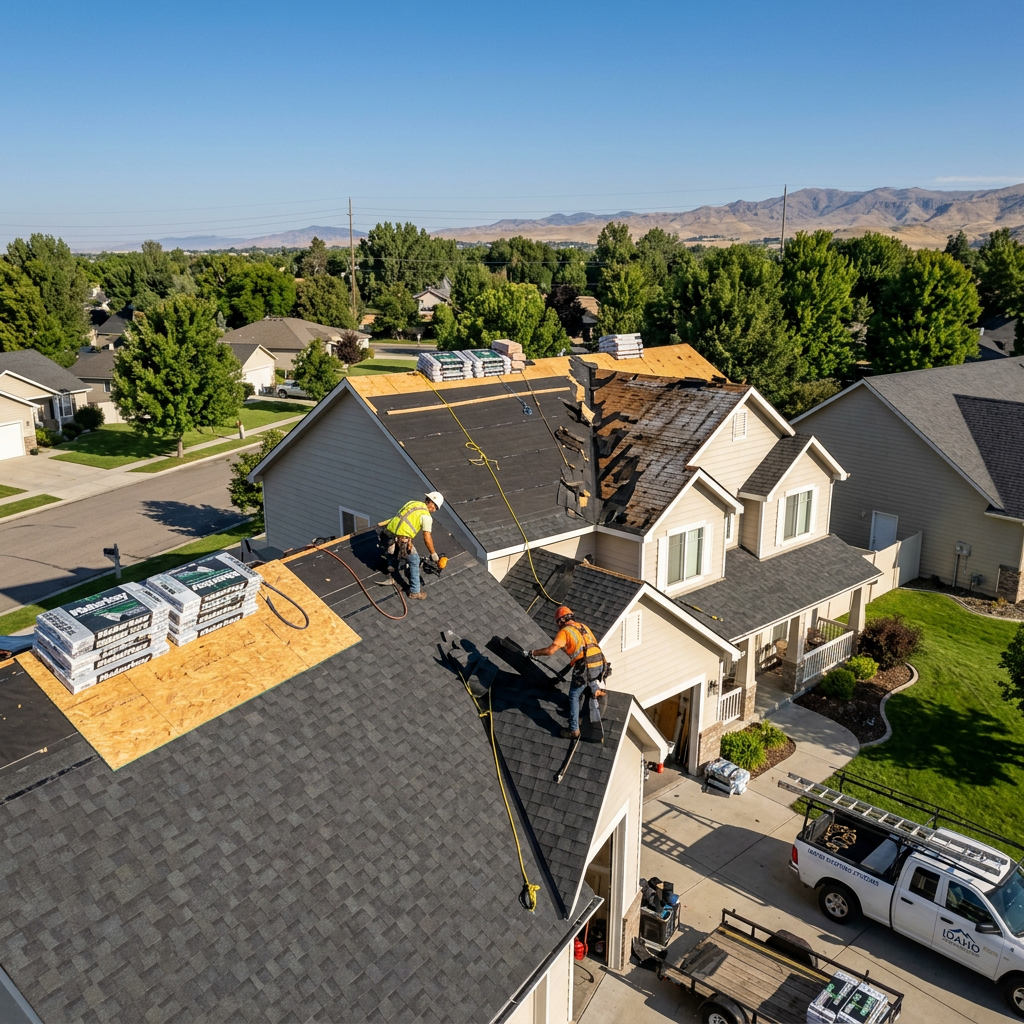
How long does a hail damage roof replacement take in Kuna? Most single-family Treasure Valley homes are torn off and replaced in one to two days. Kuna Roofing Pros dries in the roof on day one so your home stays protected overnight regardless of weather.
Will filing a hail claim raise my insurance premium? Hail claims are typically considered "act of God" claims and don't raise individual premiums the way at-fault claims do. However, multiple claims in a short period — or area-wide claim spikes after a major storm — can affect rates regionally. This is a question for your insurance agent.
What if my roof is old and has hail damage? This is actually the best-case scenario for a claim. An old roof with documented hail damage gets replaced on insurance instead of out of pocket. If your Kuna roof is 15+ years old and you've been through hail seasons without an inspection, this is exactly the time to schedule one.
Get a Free Hail Damage Inspection in Kuna
If a storm hit the Treasure Valley recently — or anytime in the last several months — and you haven't had your roof checked, schedule a free inspection. Kuna Roofing Pros is local, licensed and insured in Idaho, and we work directly with insurance adjusters at no additional cost. We document damage in the format insurance companies need, we don't pressure you to sign anything, and we don't chase storms across state lines.
Call (208) 506-6292 or use the form on our homepage to schedule. We respond within one business day across Kuna, Eagle, Meridian, Nampa, and Star.